
We specialize in treating recurrent and chronic depression in patients who have not responded adequately to medication or psychotherapy, using FDA-guided TMS therapy.


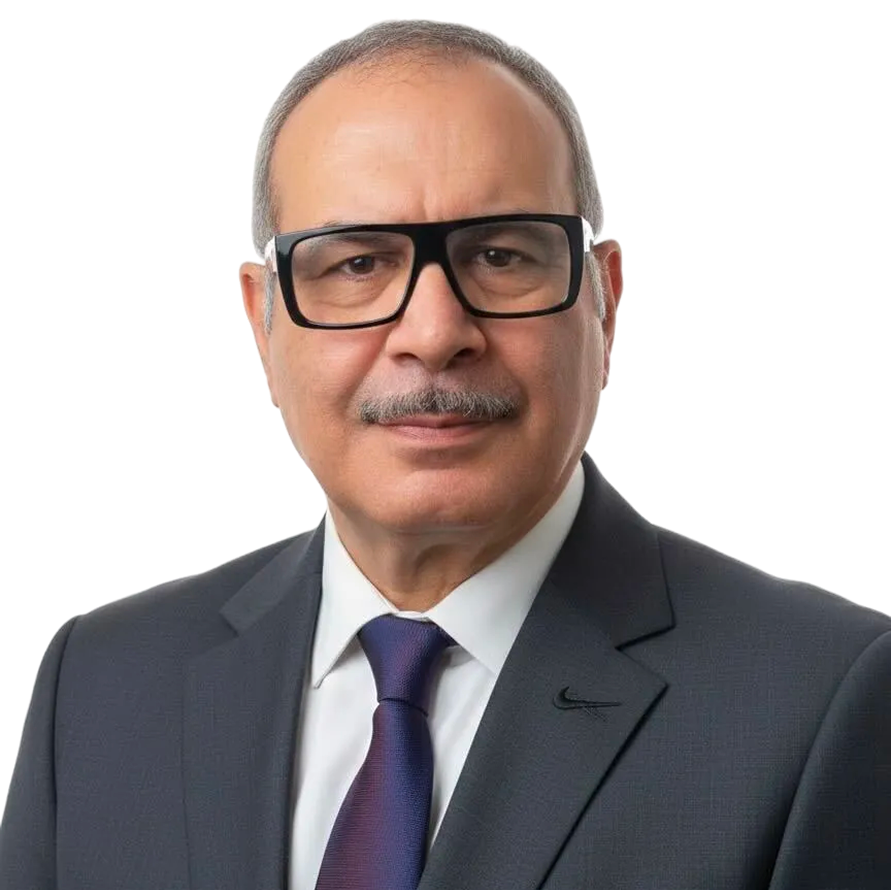
Dr. Hazem Sokkar is a board-certified psychiatrist with over 30 years of experience treating the full range of adult psychiatric conditions, with a primary focus on major depressive disorder. He graduated from Ain Shams University College of Medicine in Cairo, Egypt, completed his psychiatry internship at Temple University in Philadelphia, and his psychiatry residency at the University of Oklahoma.
Dr. Sokkar specializes in treating recurrent and chronic depression, particularly in patients who have not responded adequately to antidepressant medications or psychotherapy. His approach integrates advanced psychiatric evaluation with evidence-based treatment protocols, including Transcranial Magnetic Stimulation (TMS).
TMS Therapy may be an appropriate treatment option for individuals with clinical depression who have not experienced satisfactory improvement with antidepressant medications or psychotherapy, or who have been unable to tolerate medication side effects.
TMS is not considered a treatment of last resort but rather a mainstream, noninvasive therapy that can be used alongside medication and psychotherapy as part of a comprehensive treatment plan.




A non-invasive, FDA-approved treatment for major depressive disorder that uses targeted magnetic pulses to stimulate areas of the brain involved in mood regulation.
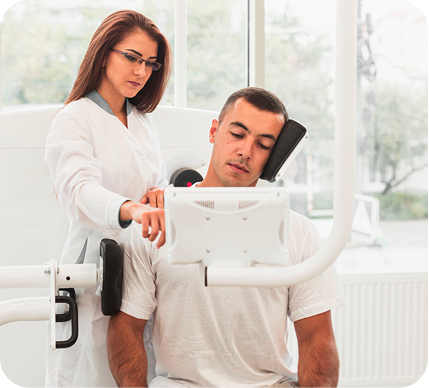
Specialized care for recurrent and chronic depression, particularly for patients who have not achieved adequate relief from medications or psychotherapy.


Comprehensive psychiatric assessment to determine eligibility for TMS Therapy, with ongoing monitoring throughout the treatment process.

An outpatient treatment that does not require anesthesia or sedation, allowing patients to return to normal activities immediately after sessions.
Your evaluation includes a comprehensive psychiatric history, review of prior treatments, and assessment of whether TMS Therapy is appropriate for you.
During the first session, we determine the optimal placement and strength of the magnetic field for your treatment.
Each treatment session lasts approximately 37 minutes. Patients remain awake and alert during treatment and may listen to music or watch television.

Individual results vary. Patient stories reflect real experiences and are not a guarantee of specific outcomes.



TMS Therapy has been widely studied and featured in national and international medical and scientific publications for its effectiveness in treating depression.
TMS stands for Transcranial Magnetic Stimulation. TMS is a non-invasive brain stimulation technique that uses a treatment coil placed over the patients head to administer brief magnetic pulses to a specific location in the brain. When these pulses are administered in rapid succession, it is referred to as “repetitive TMS” or “rTMS”. TMS can be used therapeutically, and has been used to treat depression since the 1980’s.
TMS produces changes in the activity of neurons in regions of the brain thought to be associated with mood or pain regulation, such as the prefrontal cortex. The magnetic pulses that pass through the skull and into the brain induce brief activity of nerve cells inside the magnetic field beneath the treatment coil. The frequency TMS pulse delivery influences whether brain activity is increased or decreased after therapy.
TMS might be used as an alternative treatment, or to augment pharmacotherapy or psychotherapy. Patients who have failed to achieve an adequate response from pharmacotherapy, or who are unable to tolerate medications, might consider TMS therapy. However, similar to pharmacotherapy, not all patients will respond to TMS treatment.
No, TMS and ECT are very different treatments. Electroconvulsive therapy (ECT) or “shock therapy” intentionally causes a seizure. Patients receiving ECT must be sedated with general anesthesia and paralyzed with muscle relaxants. Recovery from an ECT treatment session occurs slowly, and patients are usually closely monitored for minutes to a few hours after treatment.
By contrast, TMS does not induce a seizure and therefore does not require sedation, anesthesia, or muscle relaxants. Patients are able to resume daily activities immediately after a TMS session.
TMS is currently FDA approved to treat major depression. Ongoing studies are currently researching the effects and usefulness of TMS as a treatment for pain, tinnitus, anxiety, and more. Researchers in these areas follow current guidelines set by the FDA for treating depression.
Providing evidence-based psychiatric care and advanced TMS therapy for adults experiencing depression, anxiety, and treatment-resistant mood disorders.
© 2026 TMS Therapy Center of Tulsa. All rights reserved.